320+ 5-Star Google Reviews
Google Reviews
Headache & Migraine Relief in Bee Cave
Tired of debilitating headaches or migraines dictating your life? At Elite Wellness Chiropractic, we specialize in identifying and correcting the underlying spinal and nerve issues that cause your pain, empowering you to reclaim clarity and comfort.
Key Takeaways: What You Need To Know About Headache Relief
- Cervicogenic headaches respond exceptionally well to spinal manipulation: Bronfort et al. (2010) demonstrated a 63% reduction in headache frequency with chiropractic treatment versus 57% with medication, with greater sustained improvement.
- Upper cervical dysfunction is the primary mechanical cause of referred head pain. The trigeminocervical nucleus allows input from C1-C3 to be perceived as headache pain.
- 85% of cervicogenic headache patients achieve meaningful improvement when combining spinal manipulation with corrective exercises, compared to 58% with exercise alone (Jull et al., 2002).
- Forward head posture reduces normal neck extension by 50%, creating sustained muscle tension that triggers tension-type headaches.
- If your headaches haven't improved after 6 weeks of treatment, reassessment of diagnosis and treatment approach is warranted according to clinical decision rules.
- Emergency Warning: If you experience headaches with fever, neck stiffness, or sudden "thunderclap" onset, seek emergency medical attention immediately.
Understanding Headaches & Migraines: Our Corrective Approach
The majority of recurring headaches stem from dysfunction in your upper cervical spine and its intricate relationship with your nervous system. To understand why chiropractic care is so effective, we examine the anatomical pathways that create this debilitating pain.

The Trigeminocervical Connection
This neural convergence point processes sensory input from both your face/head and your upper cervical nerves (C1-C3). As Bogduk & Govind (2009) documented, this explains why your brain literally cannot distinguish between signals coming from your neck versus your head.
The Forward Head Posture Problem
Modern life has created an epidemic of forward head posture. Watson & Trott (1993) found this postural dysfunction reduces normal neck extension by 50%, creating chronic tension in your suboccipital muscles that triggers the headache cycle.
Myofascial Trigger Point Involvement
Trigger points in specific muscles create predictable referred pain patterns. Tension in suboccipital or upper trapezius muscles refers pain to the back, top, or sides of the head, perfectly mimicking classic tension and migraine pain.
Signs, Symptoms & When to Pay Attention
Lumbar Disc Symptoms
- Cervicogenic: Unilateral pain starting at the base of your skull
- Tension-type:Band-like pressure around your head
- Migraine: Throbbing pain with cervical neck involvement
- "Tech Neck": Pain worsening with prolonged computer work
Associated Symptoms
- Neck stiffness or reduced range of motion
- Shoulder and upper back muscle tension
- Jaw tension or TMJ dysfunction
- Dizziness, visual disturbances, or light sensitivity
Diagnostic Clues
- Pain improves temporarily with neck stretching
- Pain worsens with certain neck positions
- Sleep disruption due to positional discomfort
- Cervical rotation is less than 70°
SEEK IMMEDIATE EMERGENCY CARE IF:
- Sudden onset "thunderclap" headache (worst of your life)
- Headache with fever, neck stiffness, or rash
- New headache pattern after age 50
- Progressive headache with neurological signs (weakness, vision/speech changes)
- Severe headache following significant head trauma
Consider Chiropractic Evaluation If
- Headaches are accompanied by neck or shoulder pain
- Head pain worsens after prolonged sitting or computer work
- You frequently wake up with a headache or stiff neck
- Stretching or massaging your neck provides temporary relief
EVIDENCE-BASED OUTCOMES
What the Research Says About Headache & Migraine Care
Reduction in frequency vs 57% on meds
(Bronfort et al., 2010)
Achieve meaningful improvement
(Jull et al., 2002)
Most effective intervention ranking
(Moore et al., 2019)

Randomized Controlled Trial Evidence
Haas et al. (2010) conducted a 24-week study comparing high-velocity manipulation to medication. The manipulation group achieved a 60% reduction in headache days versus only 35% in the medication group, with improvements maintained at 52-week follow-up.
Comparative Effectiveness
Jull et al. (2002) found that spinal manipulation alone produced 69% improvement, while exercise alone achieved 58%. Most importantly, combination therapy (manipulation plus exercise) achieved 85% improvement rates.
Migraine Prevention
Chaibi & Russell (2012) found moderate evidence supporting manual therapy for primary headaches. Tuchin et al. (2000) specifically showed 22% reduction in migraine frequency with spinal manipulation compared to 16% with amitriptyline.
Our Comprehensive Solutions for Lasting Headache & Migraine Relief

Detailed Examination Process
Goniometric assessment of cervical range of motion, cranio-cervical flexion testing, and detailed orthopedic testing to differentiate the specific root cause of your head pain.
Advanced Diagnostic Imaging
When clinically indicated, digital X-rays assess upper cervical spine alignment (atlantooccipital and atlantoaxial relationships) to guide precision treatment planning.
Evidence-Based Adjustments
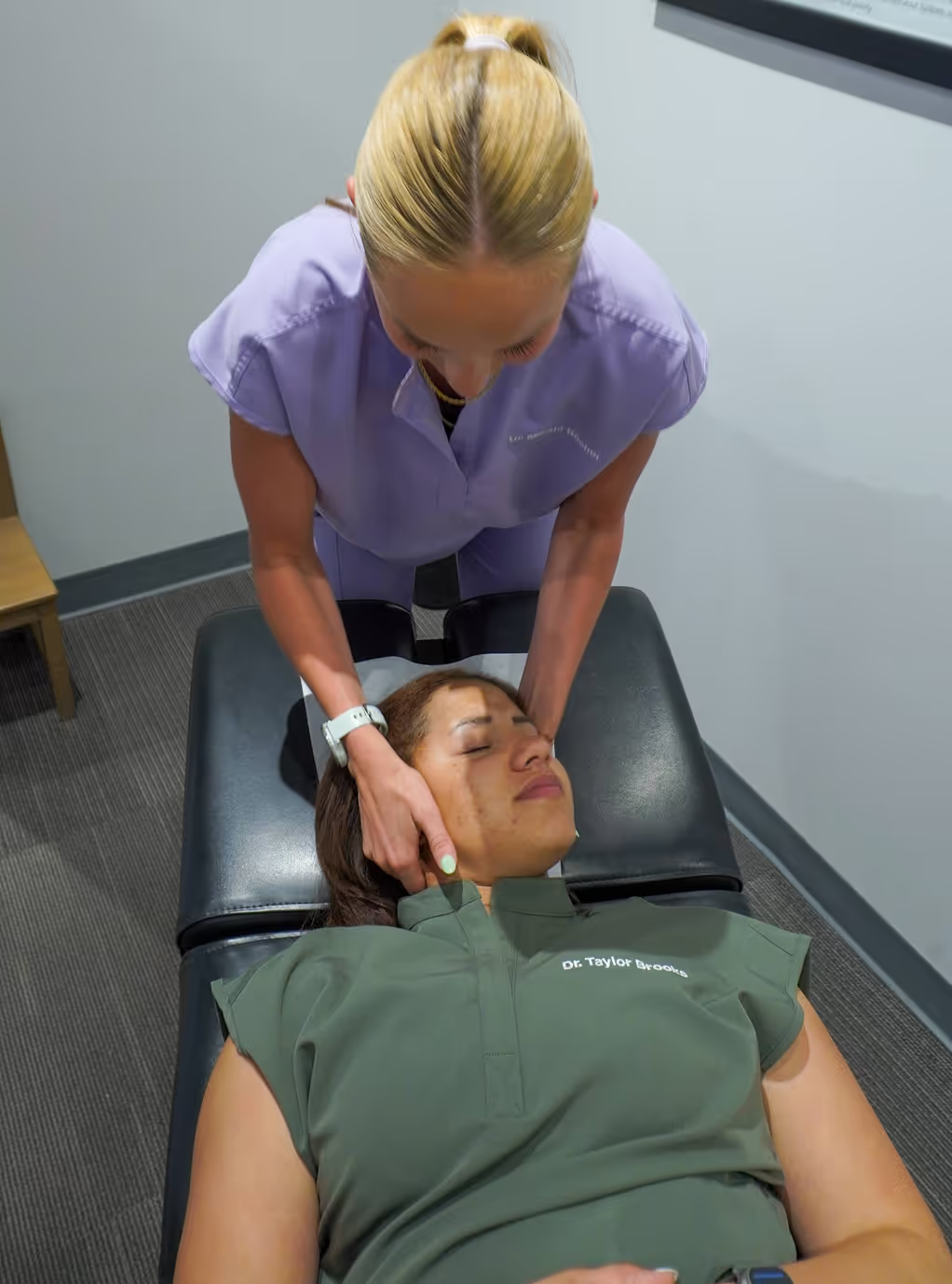
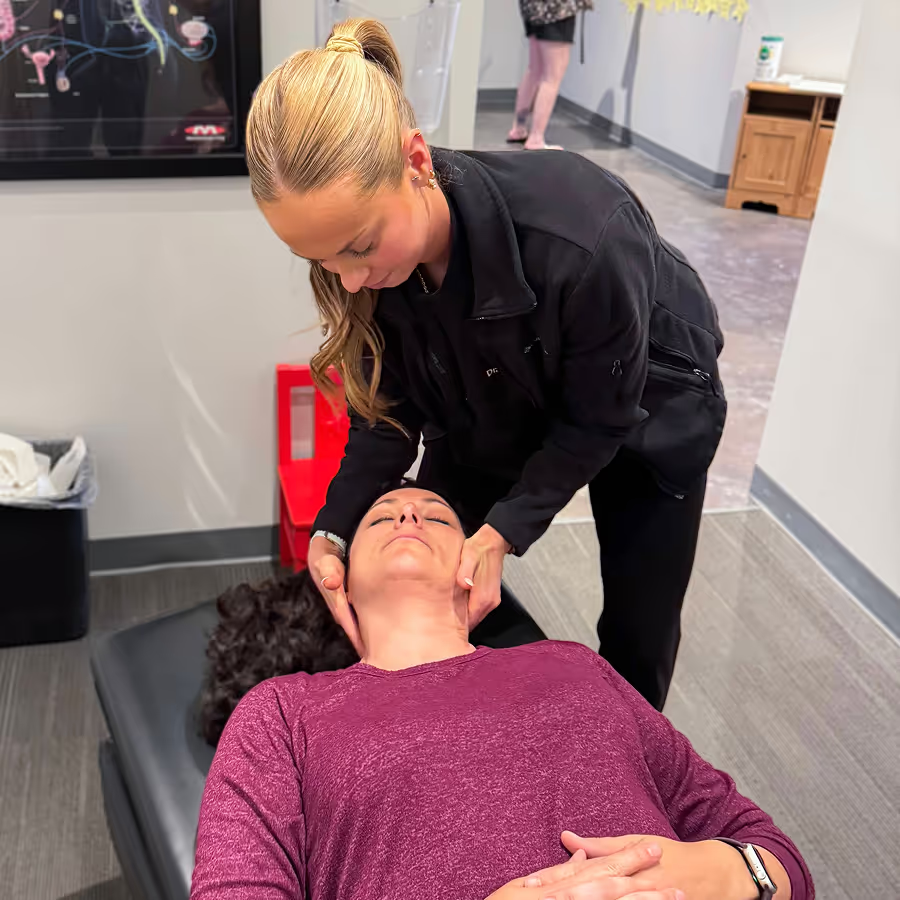
Specific high-velocity, low-amplitude manual adjustments or gentle instrument-assisted Activator methods targeting the exact dysfunctional cervical segments.
Corrective Exercise Integration
Following the research model, we prescribe specific corrective exercises targeting deep cervical flexor strengthening and posture restoration for lasting stability.
Your Clear Path to Headache Relief: Our 3-Step Process
STEP 01
Comprehensive Discovery
We conduct a thorough assessment, including X-rays if needed, to pinpoint the root cause of your headaches.
STEP 02
Personalized Corrective Plan
We design a tailored treatment plan of precise adjustments and home care strategies for lasting relief.
STEP 03
Achieve & Maintain Results
Through consistent care, you'll find relief and build resilience for long-term spinal health and clarity.
What to Expect During Treatment
Initial & Progressive Phases (Weeks 1-8)
- Weeks 1-4: Focus on reducing acute symptoms. 2-3 visits/week. Most notice relief in muscle tension immediately, with significant headache reduction by week 3-4.
- Weeks 4-8: Transition to weekly sessions emphasizing corrective exercises and postural training. Reassessment using standardized outcome measures.
- Milestone: 50% or greater improvement in headache frequency and intensity typically achieved.
Stabilization Phase (Weeks 8-12)
- Focus: Maintaining improvements and preventing recurrence. Transitioning to bi-weekly or monthly sessions.
- Home Care: Heavy emphasis on home exercise programs, sleep positioning, and ergonomic workstation modifications.
- Milestone: Long-term success and reduced dependence on pain medications.
CLINICAL HONESTY
When Chiropractic Care May Not Be the Right Fit
Patient safety is our priority. Certain conditions make cervical spine manipulation inappropriate, such as suspected vertebrobasilar insufficiency, active spinal infections, severe rheumatoid arthritis with instability, or recent trauma/fractures. Dr. Booher rigorously screens for these absolute contraindications before proceeding with any care.
For patients with severe osteoporosis or those on heavy anticoagulant therapy, we modify our techniques to gentle, instrument-assisted methods. Following the clinical "Rule of 50s", if you do not achieve at least 25% improvement within 4 weeks, we immediately reassess the diagnosis and coordinate advanced imaging or specialist referrals to ensure you get the exact care you need.
Common Questions About Headaches & Migraines
Yes, research demonstrates that chiropractic care is particularly effective for cervicogenic headaches and can significantly help certain types of migraines. Bronfort et al. (2010) showed 63% reduction in headache frequency with spinal manipulation. Effectiveness is highest when your migraines have a cervical spine component — which affects approximately 70% of migraine sufferers.
Neck tension headaches result from dysfunction in your upper cervical spine (C1–C2 joints), creating aberrant input to the trigeminocervical nucleus complex. Forward head posture reduces normal neck extension by 50%, creating chronic suboccipital muscle tension that triggers the recurring headache cycle.
Most patients begin experiencing improvement by week 3–4 of consistent treatment, with maximum benefits achieved by 8–12 weeks. The “Rule of 50s” indicates that 50% improvement within 2 weeks suggests a good prognosis for recovery. Some patients do experience immediate relief in neck mobility after the first few sessions.
Chiropractic treatment has an excellent safety profile. Church et al. (2016) analyzed over 1.8 million visits and found serious adverse events occurring in only 1 per 1,000,000 manipulations. Minor side effects like temporary soreness occur occasionally but resolve quickly. Dr. Booher performs thorough screening before all treatments.
Absolutely. Watson & Trott (1993) demonstrated that forward head posture forces chronic muscle tension to support the heavy weight of the head. This sustained tension sends ongoing nociceptive input to the brain, directly triggering tension-type headaches and exacerbating migraines.
Most effective protocols involve 2–3 treatments per week for the first 2–4 weeks, progressing to weekly sessions for weeks 4–8. Haas et al. (2010) showed maximum benefits are typically achieved and sustained by 12 weeks. Progress is reassessed constantly.
Yes. Bronfort et al. (2010) found that patients receiving spinal manipulation had continued improvement after treatment ended, unlike the medication group whose benefits stopped when medication was discontinued. Many patients successfully reduce or eliminate their headache medications as their cervical function improves.
Still have questions?
What Our Patients Say About Headache Relief
Claudia Alejandra Perez
Bee Cave, TX
"I'm really happy with this place! Dr. Mikala takes the time to explain how your spine and overall health are connected. Since coming here, my dizziness and headaches have improved, and I have more energy for my daily life. I totally recommend Dr. Mikala!"
Sarah T.
Lakeway, TX
"I used to get severe tension headaches from sitting at my computer all day. Dr. Booher didn't just mask the pain, she worked on my 'tech neck' posture. The frequency has plummeted."
Michael B.
Westlake, TX
"After years of relying on migraine pills, I was skeptical. But adjusting my upper cervical spine completely changed the game. I can finally go weeks without a single episode. Life changing."
Related Conditions We Also Treat
Start Your Recovery Journey with Our Bee Cave Team
Don't continue suffering with frequent headaches when effective, evidence-based treatment is available. Contact our clinic today to schedule your thorough evaluation and begin your journey toward pain-free living.
*Dr. Mikala Booher, DC serves Bee Cave, Lakeway, West Lake Hills, Dripping Springs, and Southwest Austin.
Bogduk, N., & Govind, J. (2009). Cervicogenic headache: An assessment of the evidence on clinical diagnosis, invasive tests, and treatment. Current Pain and Headache Reports, 13(2), 103-111.
Bronfort, G., Assendelft, W. J., Evans, R., Haas, M., & Bouter, L. (2001). Efficacy of spinal manipulation for chronic headache: A systematic review. Journal of Manipulative and Physiological Therapeutics, 24(7), 457-466.
Bronfort, G., Nilsson, N., Haas, M., Evans, R., Goldsmith, C. H., Assendelft, W. J., & Bouter, L. M. (2004). Non-invasive physical treatments for chronic/recurrent headache. Cochrane Database of Systematic Reviews, (3), CD001878.
Carnes, D., Mars, T. S., Mullinger, B., Froud, R., & Underwood, M. (2010). Adverse events and manual therapy: A systematic review. Manual Therapy, 15(4), 355-363.
Chaibi, A., & Russell, M. B. (2012). Manual therapies for migraine: A systematic review. The Journal of Headache and Pain, 13(4), 351-359.
Church, E. W., Sieg, E. P., Zalatimo, O., Hussain, N. S., Glantz, M., & Harbaugh, R. E. (2016). Systematic review and meta-analysis of chiropractic care and cervical artery dissection: No evidence for causation. Cureus, 8(2), e498.
Defeyter, K., Rushton, A., & Ruscoe, S. (2008). Enhanced clinical reasoning in an experienced physiotherapist and effects on treatment of a patient with low back pain. Physiotherapy, 94(4), 300-309.
Fernández-de-las-Peñas, C., Cuadrado, M. L., & Pareja, J. A. (2007). Myofascial trigger points, neck mobility, and forward head posture in episodic tension-type headache. Headache, 47(5), 662-672.
Haas, M., Spegman, A., Peterson, D., Aickin, M., & Vavrek, D. (2010). Dose response and efficacy of spinal manipulation for chronic cervicogenic headache: A pilot randomized controlled trial. The Spine Journal, 10(2), 117-128.
Jull, G., Trott, P., Potter, H., Zito, G., Niere, K., Shirley, D., ... & Richardson, C. (2002). A randomized controlled trial of exercise and manipulative therapy for cervicogenic headache. BMJ, 325(7364), 1-7.
Moore, C., Leaver, A., Sibbritt, D., & Adams, J. (2019). The management of common recurrent headaches by chiropractors: A descriptive analysis of a nationally representative survey. BMC Neurology, 19(1), 1-8.
Page, P. (2011). Cervicogenic headaches: An evidence-led approach to clinical management. International Journal of Sports Physical Therapy, 6(3), 254-266.
Silberstein, S. D., Holland, S., Freitag, F., Dodick, D. W., Argoff, C., & Ashman, E. (2012). Evidence-based guideline update: Pharmacologic treatment for episodic migraine prevention in adults. Neurology, 78(17), 1337-1345.
Tuchin, P. J., Pollard, H., & Bonello, R. (2000). A randomized controlled trial of chiropractic spinal manipulative therapy for migraine. Journal of Manipulative and Physiological Therapeutics, 23(2), 91-95.
Watson, D. H., & Trott, P. H. (1993). Cervical headache: An investigation of natural head posture and upper cervical flexor muscle performance. Cephalalgia, 13(4), 272-284.